
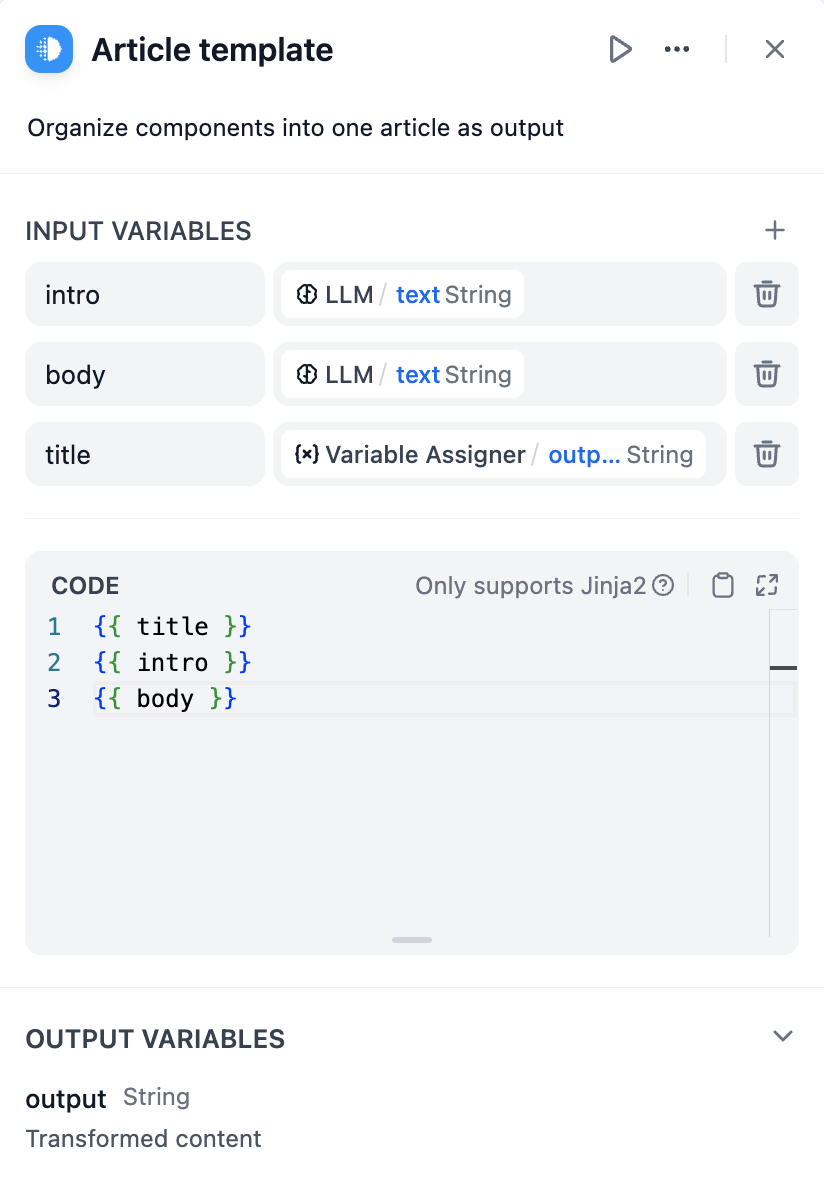
Template lets you dynamically format and combine variables from previous nodes into a single text-based output using Jinja2, a powerful templating syntax for Python. It’s useful for combining data from multiple sources into a specific structure required by subsequent nodes. The simple example below shows how to assemble an article by piecing together various previous outputs:Documentation Index
Fetch the complete documentation index at: https://dify-6c0370d8-fix-language-redirection.mintlify.app/llms.txt
Use this file to discover all available pages before exploring further.
 Beyond naive use cases, you can create more complex templates as per Jinja’s documentation for a variety of tasks. Here’s one template that structures retrieved chunks and their relevant metadata from a knowledge retrieval node into a formatted markdown:
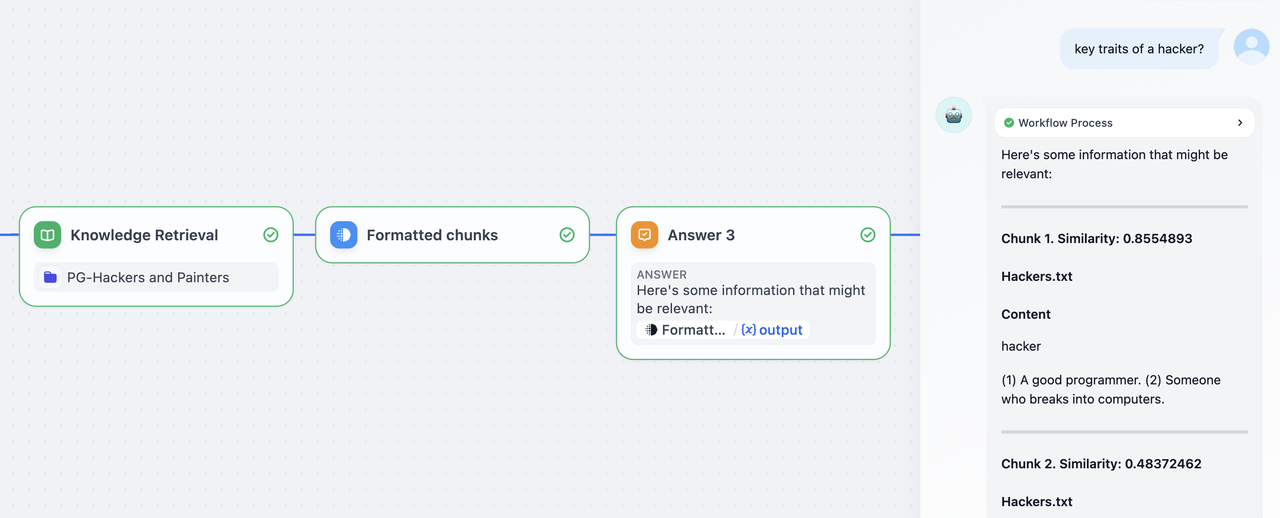 This template node can then be used within a Chatflow to return intermediate outputs to the end user, before a LLM response is initiated.
The Answer node in a Chatflow is non-terminal. It can be inserted anywhere to output responses at multiple points within the flow.
Example: Support for rendering HTML forms: